

No one wants to see their dog frightened. Yet every year, countless dogs spend fireworks displays trembling, hiding, panting, or desperately trying to escape.
With many parts of the world celebrating this time of year, from Canada Day on July 1st to Independence Day in the United States on July 4th, fireworks season is here. A 2024 study found that nearly 45% of dogs show fear of fireworks, making it one of the most common noise-related fears our dogs experience.
The best way to help your dog during fireworks is to prepare before the fireworks begin. Keep your dog home, know when displays are scheduled in your area, and have a plan in place. For some dogs, games and enrichment activities can create positive associations with the sounds of fireworks. Other dogs may need calming routines or additional support.
As dog owners, one of the most important things we can do is protect our dogs. And when it comes to dogs and fireworks, being proactive can make all the difference.
Fireworks don’t just affect our dogs. Wildlife, birds, livestock, and other animals can also experience significant stress and disruption. I’d love to see more communities embrace quieter alternatives, such as silent fireworks and drone light displays, so celebrations can be enjoyed while reducing the impact on the animals who share our world.
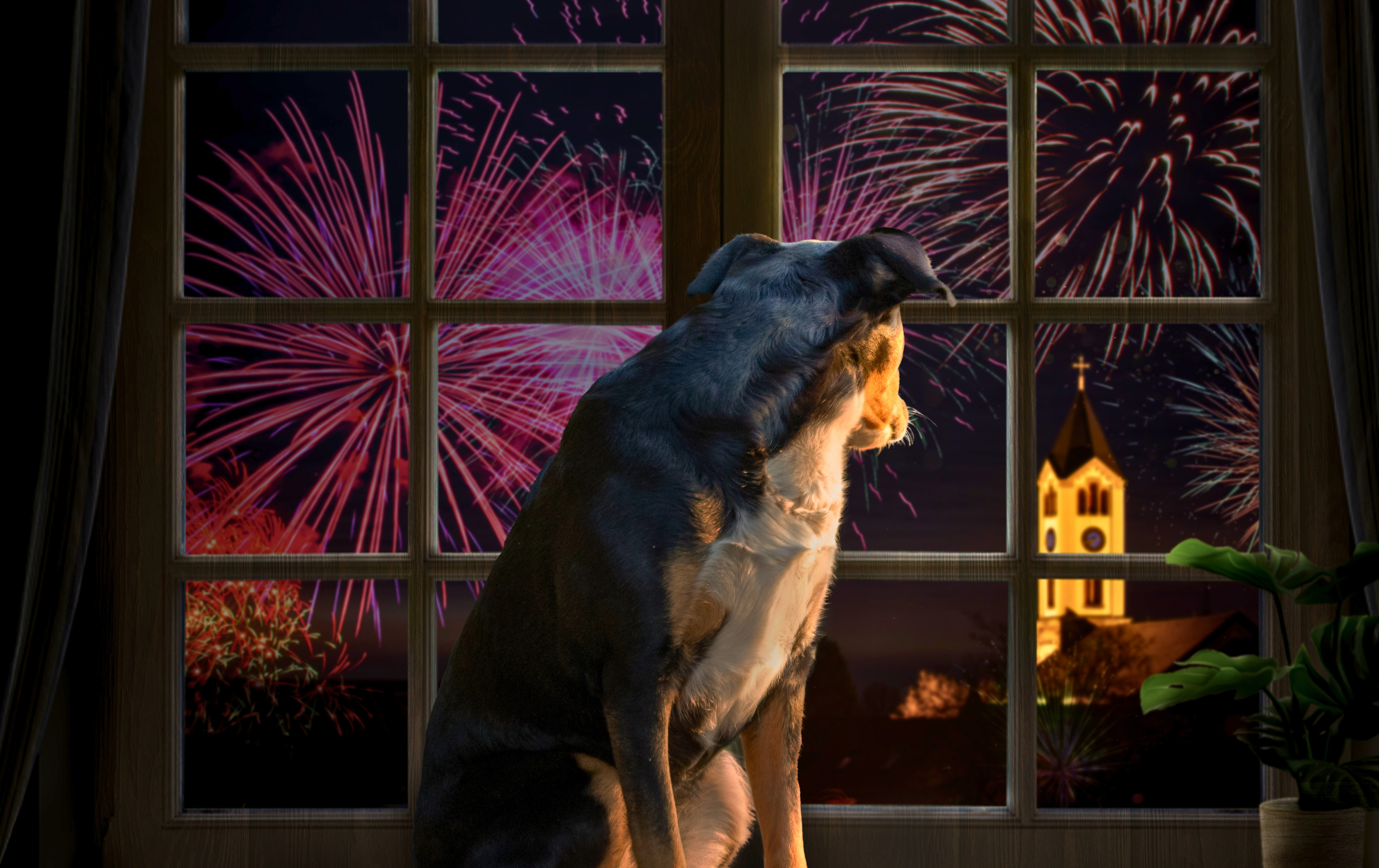
Preparing Your Dog Before Fireworks Night
If you’re a brand-new dog owner, don’t take fireworks lightly.
You may have no idea how your dog will respond to the sudden sounds and vibrations of a fireworks display. Even if your dog has never shown concern about loud noises before, you don’t know how they’ll respond until it happens. And if that happens, you’ll want to be ready.
One thing I strongly recommend is that you do not take your dog to a fireworks display. Keep your dog home. Fireworks can be an incredibly challenging experience for sound-sensitive dogs, and there is simply no benefit that outweighs the risk.
Before the fireworks season arrives, do a little research. Find out when displays are happening in your area and where they’ll be taking place. If a display is going to be very close to your home, you might decide to spend the evening somewhere quieter. If that’s not possible, that’s okay. There are still things you can do to help your dog.
On the day of the event, get your dog outside, enjoy some fresh air, and make sure they’ve had opportunities to exercise and engage their brain. I want dogs relaxed and ready to settle by the time evening rolls around. Feed dinner early and plan to stay home with your dog. Even if you think they’ll be fine, your presence can make a difference.
Three Ways to Prepare Your Dog for Fireworks
When it comes to dogs and fireworks, I think about preparation in three categories: stimulate, soothe, and settle. Which approach you use depends on the dog in front of you. Some dogs may only need one of these strategies. Others may benefit from a combination of all three.
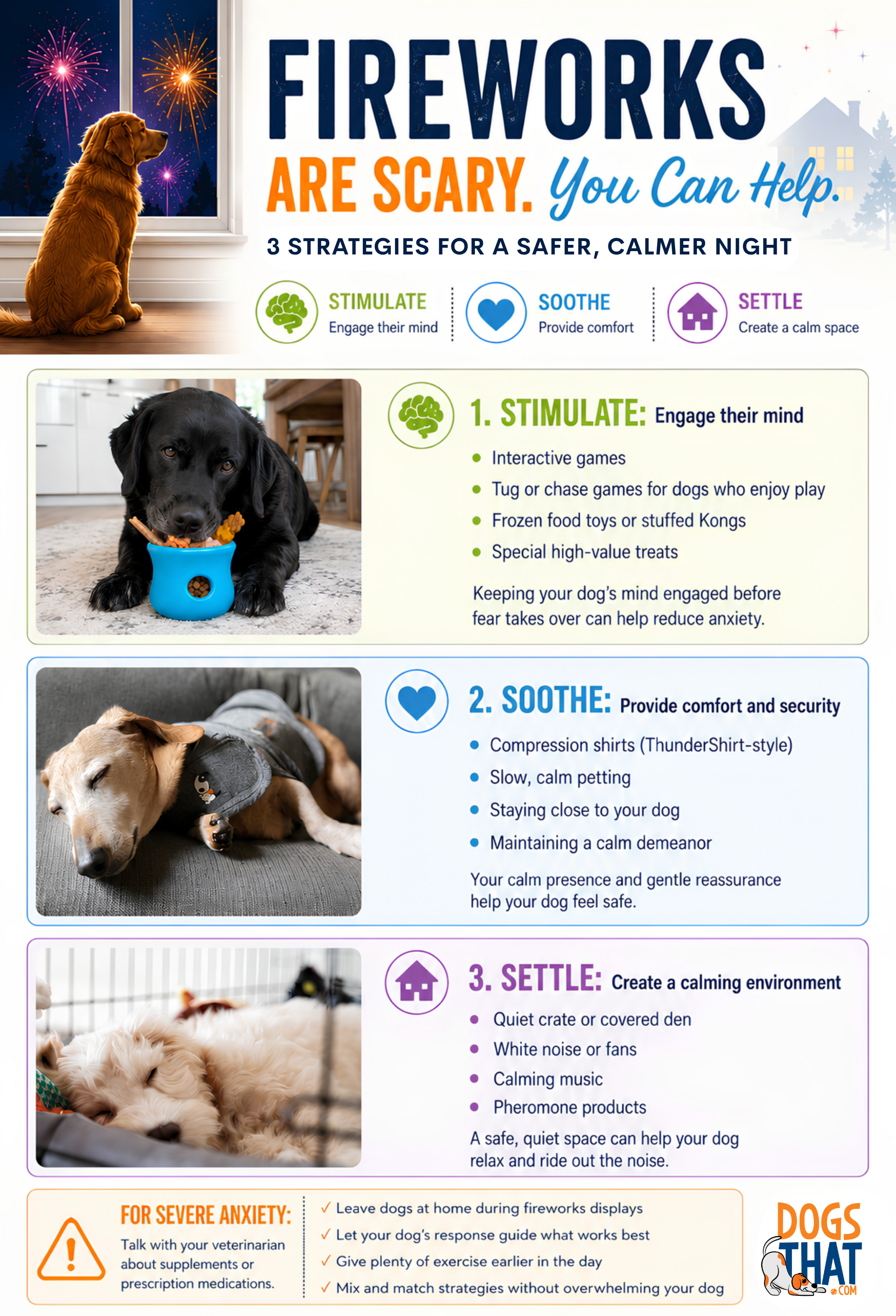
Strategy #1: 🧠 Stimulate
For puppies, young dogs, and dogs who have never shown concern about loud noises, my first strategy is what I call stimulate.
The idea is to make fireworks predict fun.
If your dog loves toys, this is the perfect opportunity to play interactive games together. Tug games, chase games, and toy searches can help shift your dog’s focus from what’s happening outside to what’s happening with you.
I often talk about what I call “thunder tug games.” If a thunderstorm is rolling in and I see lightning, I know thunder is coming. That’s my cue to start an exciting game with my dog. Over time, the dog begins to think that strange noises predict fun and engagement.
The same principle applies to fireworks.
You can also use food-based enrichment. Hide treats around the house for search games. Prepare stuffed Kongs* [Amazon Paid Link] or Toppls* [Amazon Paid Link] ahead of time. Give your dog a special chew or meaty bone that only appears when fireworks happen. The goal is to create a positive association with an event that might otherwise be concerning.
Many dogs become so engaged in searching, chewing, or playing that they pay very little attention to what’s happening outside.
Strategy #2: ❤️ Soothe
Some dogs need more than stimulation.
For dogs who show a little nervousness around loud noises, I like to focus on creating what we call a positive conditioned emotional response, or CER. In simple terms, we want our dogs to associate certain experiences with feeling calm and safe.
One option is a calming wrap or Thundershirt* [Amazon Paid Link] . Many dogs find gentle pressure comforting. The key is introducing it long before fireworks night. Put it on during quiet evenings when your dog is already relaxed so that it becomes associated with calmness rather than stress.
Music can help too. Classical music, white noise, or a fan can help soften the impact of sounds coming from outside. Some products are specifically designed to provide calming audio for dogs and can even be used as part of a gradual preparation program before fireworks season arrives.
Your presence matters as well.
Many dogs find comfort simply knowing their person is there. Gentle strokes, massage, and quiet companionship can go a long way for dogs who are only mildly concerned about fireworks.
Strategy #3: 🏠 Settle
Dogs with a history of fireworks anxiety often need additional support.
These are dogs who may have rehearsed fearful responses enough times that their anxiety escalates very quickly when they hear loud noises. For these dogs, proactive preparation is especially important.
You may choose to combine several strategies, such as calming music, pressure wraps, pheromone products, hearing protection, and relaxation exercises that have been practiced well before fireworks season begins.
I also encourage people to become students of their dog’s body language.
Watch your dog’s T.E.M.P. Look at their tail, eyes, ears, mouth, and posture. Are their ears pinned back? Are they stress panting? Are they trying to hide? These signs tell us how our dogs are coping and whether they need more support.
For some dogs, veterinary support may also be appropriate. If you know your dog struggles significantly with fireworks or thunderstorms, speak with your veterinarian well in advance. Having a plan in place can provide peace of mind for everyone involved.
Prevention Is the Goal
When it comes to dogs and fireworks, my goal is always prevention.
I want to create positive experiences before a dog ever becomes worried. I want fireworks, storms, and unexpected sounds to predict games, relaxation, comfort, and safety.
The more time we spend creating positive emotional responses before we need them, the better prepared our dogs will be when challenging situations arise.
Even if your dog has never shown concern about fireworks, these activities can become wonderful opportunities to play together, build confidence, and strengthen your relationship. And if your dog already struggles with loud noises, being proactive can make an enormous difference in how they experience future events.

Should I take my dog to a fireworks display?
No. I recommend keeping your dog home. Even if your dog has never reacted to fireworks before, you don’t know how they’ll respond until it happens, and it’s far easier to support them in a familiar environment.
What should I do if my dog is afraid of fireworks?
Start by creating a plan before the fireworks season arrives. Depending on your dog’s level of concern, that may include enrichment games, calming routines, positive emotional conditioning, hearing protection, or veterinary support. The earlier you begin preparing, the better.
How can I keep my dog calm during fireworks?
Many dogs benefit from food puzzles, search games, stuffed Kongs, special chews, calming music, white noise, and spending time with their people. The right strategy depends on the individual dog and their history with loud noises.
Why do dogs react to fireworks?
Every dog is different. Some dogs seem completely unbothered by fireworks, while others find them stressful. The challenge is that you don’t always know how your dog will respond until it happens, which is why preparation is so important.
Can puppies develop a fear of fireworks?
If you’re a puppy owner, don’t take fireworks lightly. Creating positive associations through games, enrichment, and fun activities can help set your puppy up for success before fireworks ever become a concern.
What if my dog has never reacted to fireworks before?
Don’t assume that means they never will. Even confident dogs can respond differently as they mature or encounter a particularly intense fireworks display. Having a plan in place helps protect your dog if that day ever comes.
Should I talk to my veterinarian about fireworks anxiety?
If your dog experiences significant stress, panic, or anxiety during fireworks, absolutely. Your veterinarian can help you create a plan and discuss whether additional support may be appropriate for your dog’s situation.
Gratitude
Today I’m grateful for our dogs and the trust they place in us. They don’t understand why the world suddenly becomes loud and unpredictable. They simply look to us for reassurance. Every game we play, every positive association we create, and every effort we make to help our dogs feel safe is another way of honoring that trust.
[*Amazon Links Disclosure: As an Amazon Associate I earn from qualifying purchases.
I only recommend products I use, and all opinions expressed here are my own. The links above are affiliate links that, at no additional cost to you, I may earn a small commission if you decide to buy from them. Thank you!]






Hugs not drugs ❣️🐕
Thank you for the advice. It’s going to be a long weekend, they’ve already started with the personal “backyard” fireworks here. I have lavender EO and noise-cancelling ear muffs on hand.
Thank you Susan!
I love my dog and I’m a veteran and we both hate fireworks especially the ones that keep going on after 4th of July or way before 4th of July the unexpected ones and it’s sad that wildlife got to go through trauma I love wildlife I love animals there ain’t no sense of traumatizing them every year
Thank you for your advice – appreciate it.